We clean machines, sanitise tanks and rehabilitate coolant systems on site across Alberta — or you can follow the procedure below yourself. EASYCUT customers get service at reduced rates, and on qualifying purchases the cleaning is included.
When coolant starts to smell, the sump has gone anaerobic and the bacteria in it are winning. Biocide and additives buy time; once the smell comes back within days of dosing, the fluid is finished and the machine needs a full clean-out. This guide covers that clean-out, step by step, with photographs of each stage.
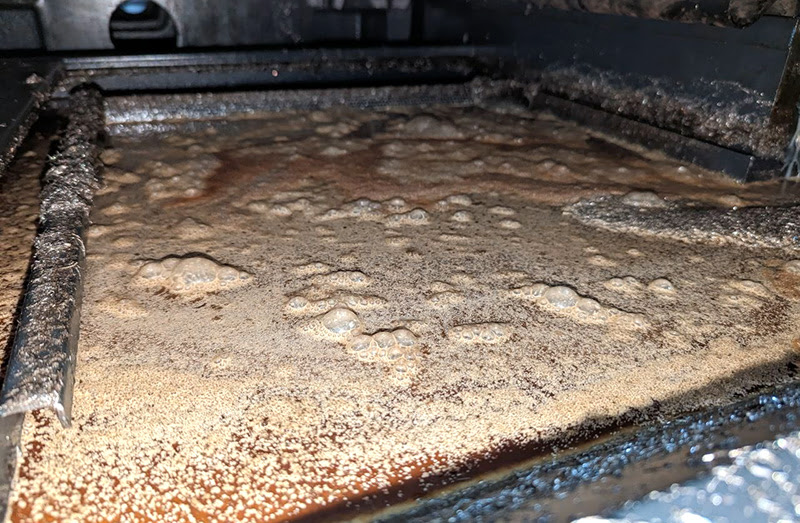
Contaminated coolant on the tank surface
Start with a proper alkaline system cleaner. The dose is a straight percentage of tank volume: 4% for moderate contamination, 6% for heavy. A 400-litre tank therefore takes 16 litres of cleaner; a 105-gallon tank takes about 4 gallons. Run it through every coolant nozzle in the machine, and through the high-pressure unit as well if the machine has one.
Before using a CNC coolant cleaner, ensure that the CNC machine is turned off and locked out properly. This step is crucial for your safety.
Using an air vacuum, remove as much of the old coolant as possible. Make sure to follow your local regulations for the proper disposal of the old coolant.
Consult your machine manual for specific instructions on maintaining the coolant tank. In general, it is recommended to mark or take pictures of all connections, such as the coolant pump, hoses, drain, and filtration hoses. If possible, move the coolant tank out for easier access.
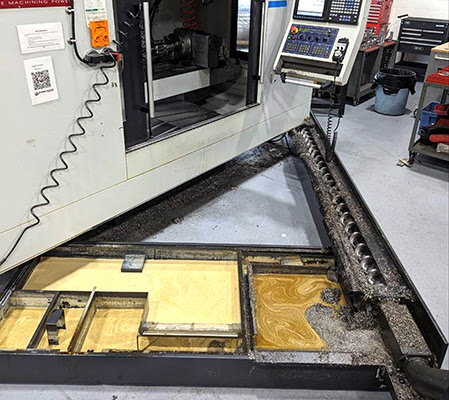
CNC machine tank with contaminated coolant
Start by removing any visible debris, such as chips, dust, or other materials, from the machine. Use brushes, putty knives, scoops, and an industrial vacuum cleaner to clean the surfaces and crevices. Take care not to damage any delicate components during this process.
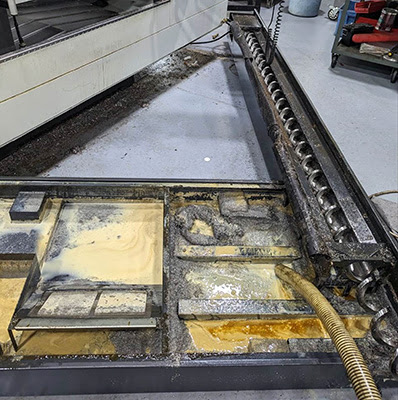
Removing old coolant and debris from the tank of CNC machine
Prepare a mixture of mild detergent and water. Before applying it to the entire machine, test the solution on a small surface to check it does not attack the finish — some detergents are aggressive to paint or aluminium. Dip a clean cloth or sponge into the solution and gently wipe down the surfaces of the CNC machine and coolant tank. Pay extra attention to areas prone to buildup, such as the spindle, tool holders, and coolant channels. Avoid excessive moisture and prevent liquid from entering electrical components. Wipe metal surfaces down immediately to prevent rust.
The system cleaner is designed to break down oils, bacteria, and other contaminants that cause odours. Rinse the system well to ensure no cleaner remains before refilling with fresh coolant.
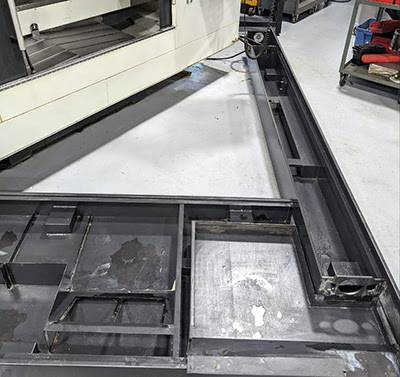
Coolant tank of CNC machine after cleaning
Reassemble any disassembled parts and put the coolant tank back in place. Fill the tank with 1/4 or 1/3 of fresh coolant with a low concentration of 2–3%. Rinse all surfaces by keeping the coolant flowing for 10–20 minutes, and then pump out the coolant.
Fill with fresh coolant. Finally, fill the machine with fresh coolant and hold a slightly higher concentration than usual for the first two weeks — the residue left in a system that has just been cleaned will pull the mix down.
What stops the smell coming back is not the clean-out but what follows it: concentration checked with a refractometer rather than guessed, tramp oil skimmed off the surface, and top-ups made with mix rather than plain water. See the rest of our coolant articles for those.
Spindle, work table and index unit
Before cleaning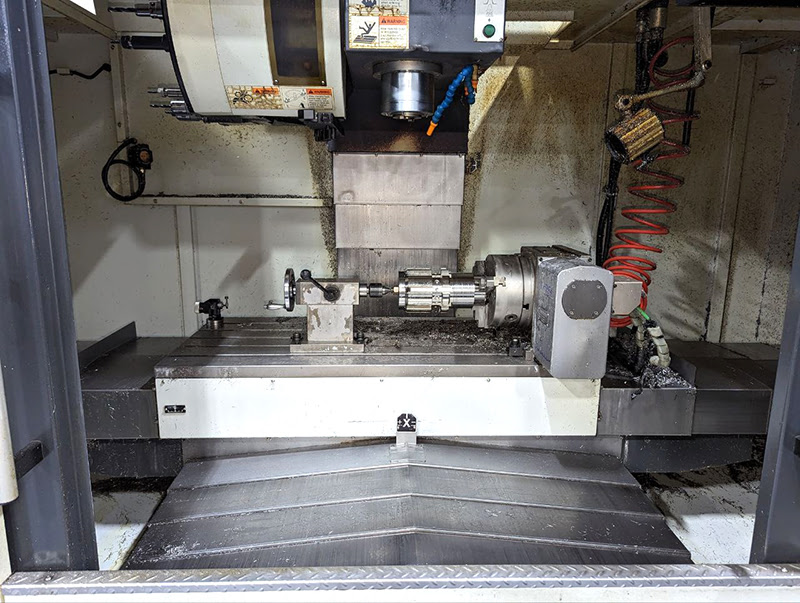
After cleaning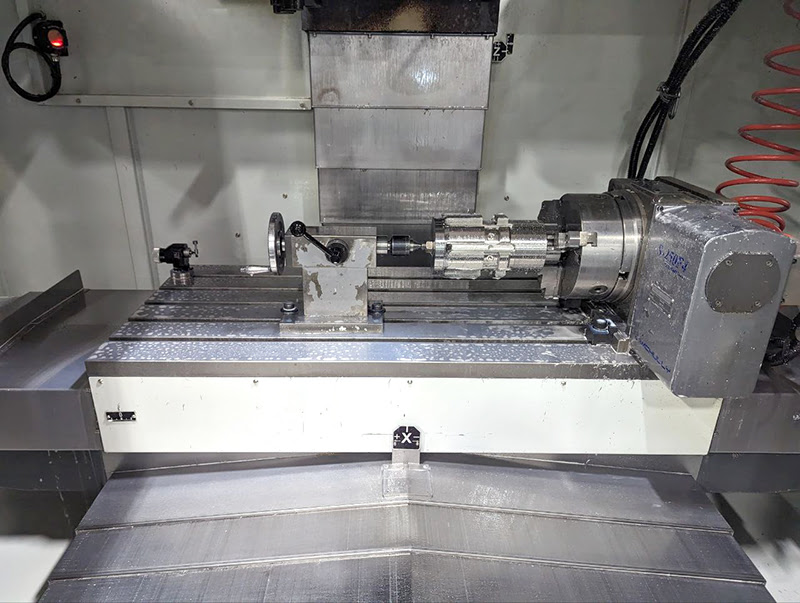
Work area and index unit
Before cleaning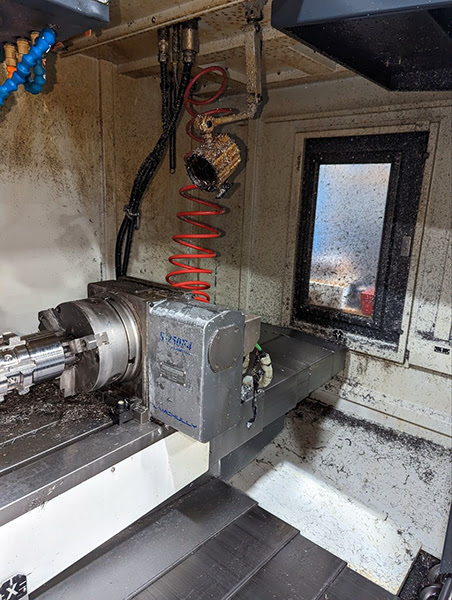
After cleaning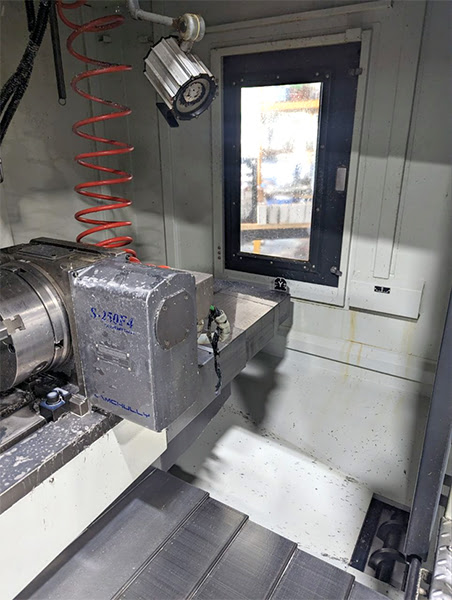
Work area, Akira CNC mill
Before cleaning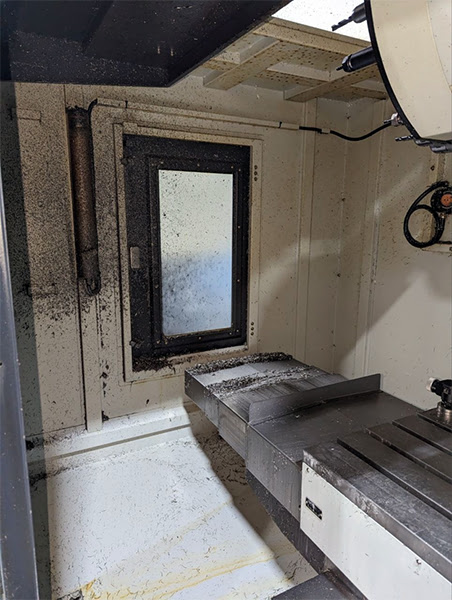
After cleaning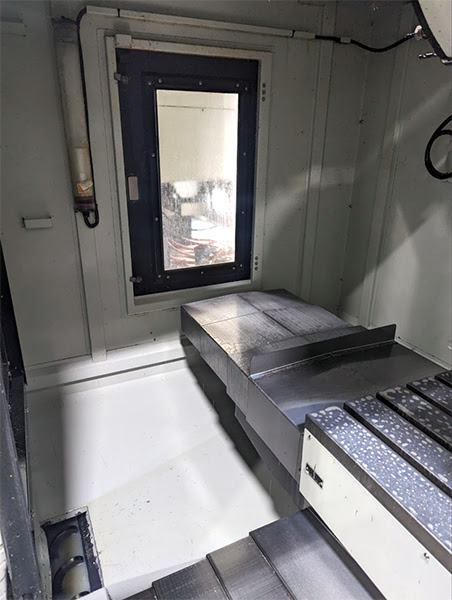
We run these fluids in our own shop in Calgary and clean these tanks ourselves. EASYCUT customers get service at reduced rates, and on qualifying purchases the cleaning is included. To book a visit, email info@cncmarket.ca or browse the coolant catalogue.
Back to the other coolant articles.
