3/8 End Mill

CA$35.31
excl. taxes
CA$36.02
excl. taxes
CA$36.12
excl. taxes
CA$43.20
excl. taxes
CA$43.20
excl. taxes
CA$29.55
excl. taxes
CA$32.54
excl. taxes
CA$35.31
excl. taxes
CA$35.62
excl. taxes
CA$29.55
excl. taxes
CA$35.31
excl. taxes
CA$36.02
excl. taxes
CA$36.12
excl. taxes
CA$43.20
excl. taxes
CA$43.20
excl. taxes
CA$29.55
excl. taxes
CA$32.54
excl. taxes
CA$35.31
excl. taxes
CA$35.62
excl. taxes
CA$29.55
excl. taxes3/8" (0.375", 9.525 mm) is where the question changes from "will this tool survive" to "how much metal per minute". The cutter is stiff enough to be driven hard, and on most machines it is the largest diameter that can actually be driven hard - which makes it the roughing size for a lot of shops.
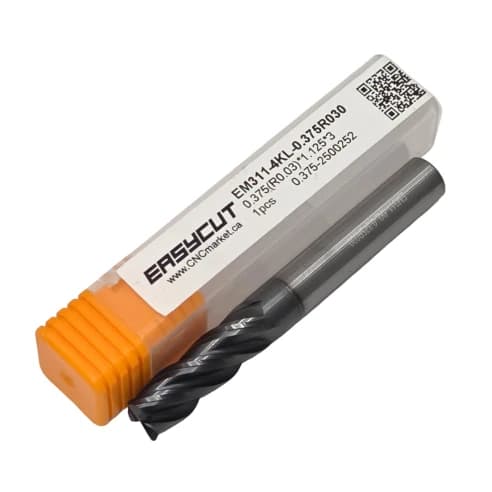
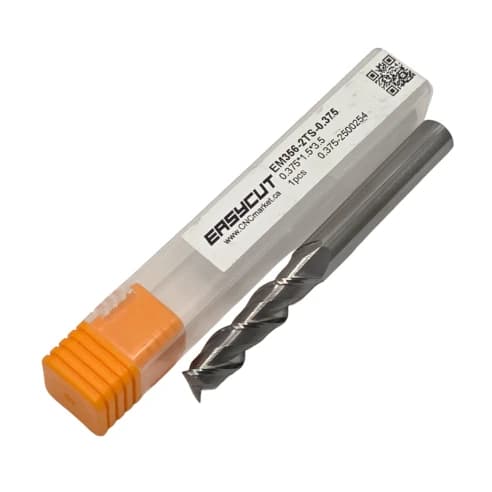
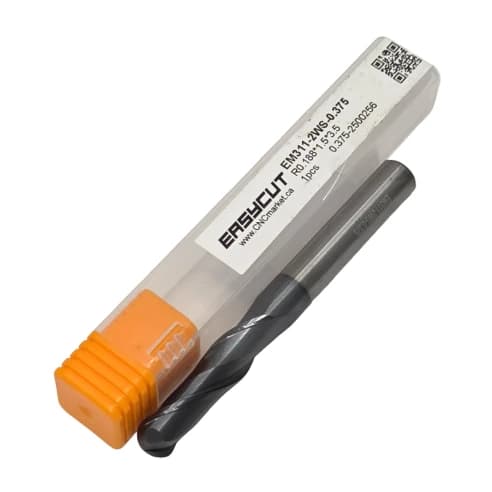
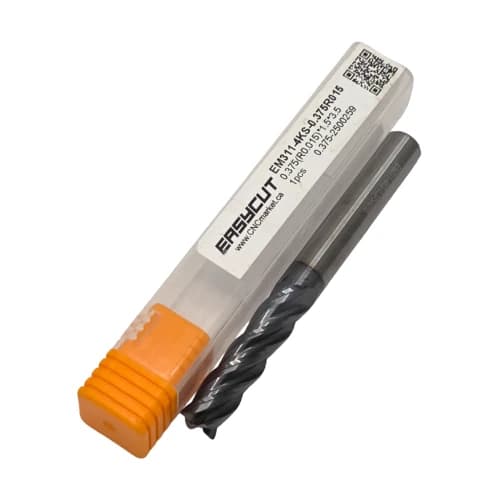
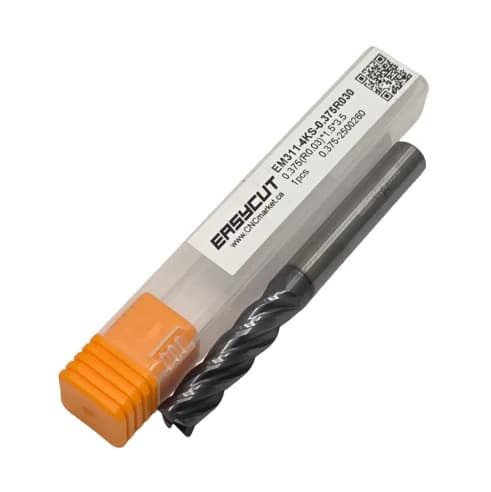
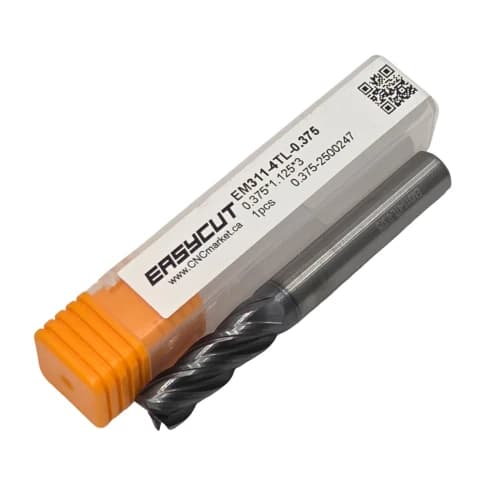
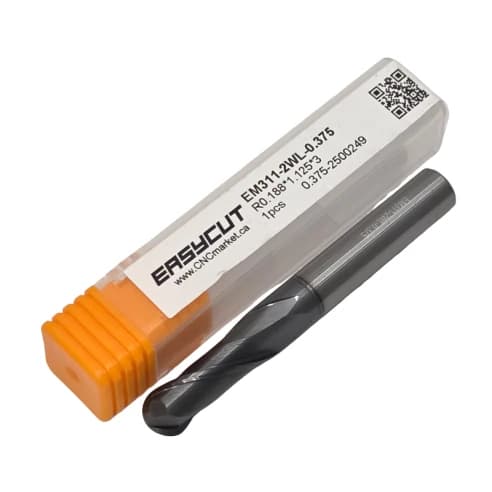
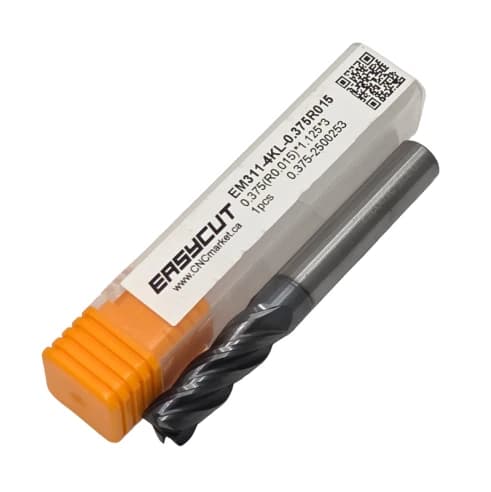
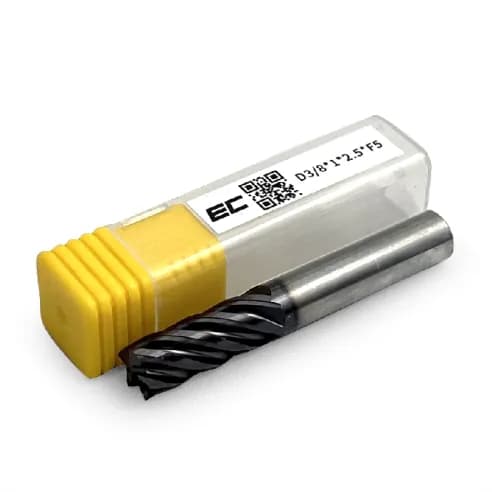
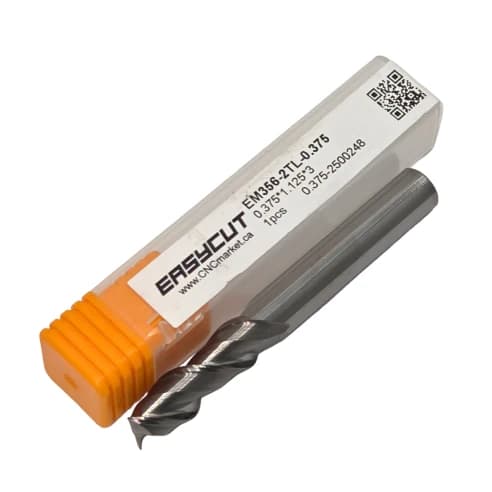
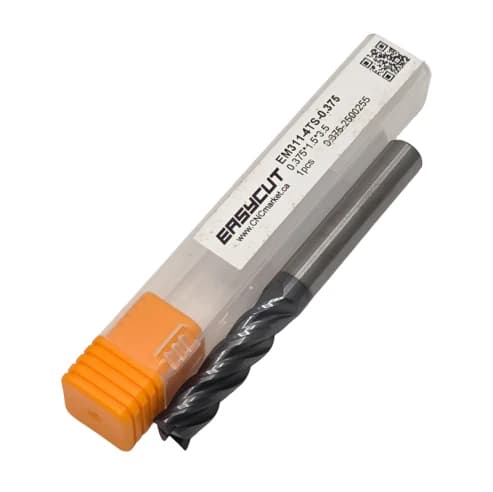
The range below covers square, corner radius and ball nose profiles in 2, 3, 4 and 5 flutes, coated and uncoated, in standard and long flute lengths. Details are on each product page.
Metal removal rate is axial depth multiplied by radial width multiplied by feed. Three numbers, and most shops only ever change one of them.
The conventional way to use a 3/8" cutter is a full-width slot at maybe half a diameter deep. The alternative is adaptive or trochoidal clearing: radial engagement cut down to ten or fifteen percent of the diameter, axial depth pushed to one and a half or two diameters - 0.56" to 0.75" at this size. Radial width goes down by a factor of ten, axial depth goes up by a factor of four, and because the radial engagement is small, chip thinning lets the feed rate go up sharply as well. The product of the three ends up higher, often substantially.
This only works if the tool can take the depth without deflecting, which is exactly what 3/8" buys you and 1/4" does not.
There is a second effect that matters more than the cycle time. In a shallow conventional cut, the same narrow band at the bottom of the flute does all the work and wears out while the rest of the cutting edge is still new. Take the cut deep and the wear spreads along the whole engaged length.
That is the real argument for a long flute length on this diameter: not reach for its own sake, but more cutting edge sharing the load. A long-flute 3/8" tool used deep can outlast a standard one used shallow on the same job, and it reaches into deep pockets without stepping up to an extension.
The trade is rigidity - a longer tool deflects more at the same stick-out - so use the flute length the job needs and no more.
Speed is no longer the constraint at this diameter. 300 SFM in steel is about 3,050 rpm and 800 SFM in aluminum about 8,150, which almost any machining centre reaches. Power and holding become the limits instead.
A deep adaptive cut in steel at 3/8" pulls real spindle load, and it pulls it sideways. A tool pulled out of the holder mid-cut is the failure mode at this size, not a snapped cutter. Use a proper holder, seat the tool fully, and if the machine has the choice, a Weldon flat or a power milling chuck rather than a lightly tightened ER collet.
Downward, the internal corner: a 3/8" cutter cannot produce a corner tighter than 3/16" (0.1875"). Detail work goes to 1/4" or smaller while the 3/8" does the bulk.
Upward, if the machine has the power and the part has the room, 1/2" clears more per pass. On a lighter machine it usually does not - the spindle gives up before the tool does, and you end up running a 1/2" cutter at 3/8" numbers.
For metric prints: 3/8" is 9.525 mm, half a millimetre under 10 mm. Fine for clearing, not a substitute for a 10 mm cutter on a dimensioned feature.
2 and 3 flutes for aluminum, where chip room decides how hard you can push. 4 and 5 flutes for steel and stainless, where more edges in the cut mean more feed at the same chip load - which is where the extra flute count actually pays.
Prices and stock are on every product page and you can order online without waiting for a quote. Delivery is free across Alberta and we ship anywhere in Canada.
We run our own machine shop in Calgary and cut with these tools ourselves. If you are moving a job onto adaptive toolpaths and want a sanity check on depth, engagement and feed before you commit a cutter to it, send us the material and the machine.